A Stranger Among You
September 30, 2026
How the Communication Structure Between Client and Designer Shapes the Progress of the Design Process
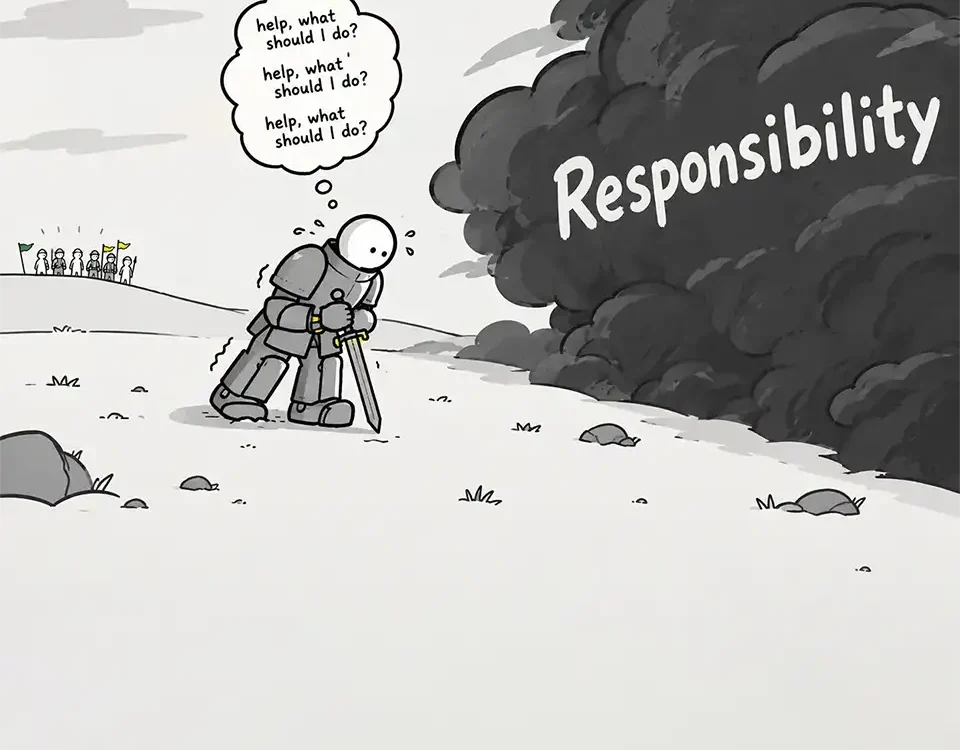
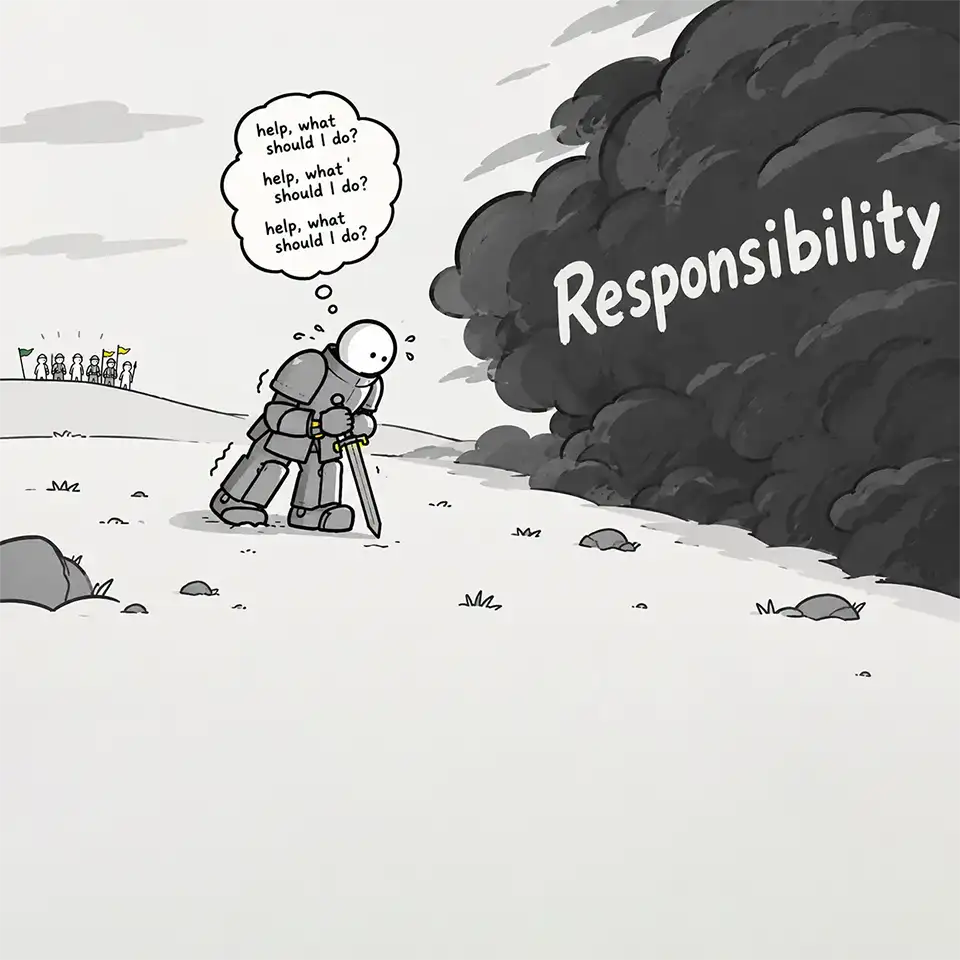
A problem can be solved in different ways. One way is for a single expert to solve it alone. In this approach, a specialist is engaged, the problem is explained to them, and they are expected to present their solution after a set period, or even, once the solution has been implemented, to report the outcome to the client. A second way is to solve the problem on the basis of the experience of the person directly involved in it. Here, the person may benefit from an advisor at their side who, at times, inspires the path toward a solution; yet they rely ultimately on themselves, proceeding through the process as the primary stakeholder who is, in effect, solving the problem for their own benefit. The approach service designers use is co-creation. In this approach, the designer as an expert does not solve the problem alone, nor is the client, as the party involved in the problem, left to create the solution. Instead, through discussion, and especially at decision-making moments, the two pass through turning points together, and both accept responsibility for the decision. At least in the ideal case, this is what the service design approach is meant to achieve: both parties come to regard the solution as their own, take greater responsibility for their share in solving the problem, and thereby raise the likelihood that the solution will be realized. The responsibility for a decision is not meant to rest solely with the designer or solely with the client. In practice, however, how much of this shared responsibility actually exists, and what sometimes prevents this principle from taking hold in the relationship between service designer and client? By following the turning points in the designer–client relationship while solving a complex problem, and by showing the challenges and shifts in direction within that relationship, this essay addresses these questions. The descriptive section is narrated in three scenes, each of which took place on a different day within a one-month period.
Scene One
Four members of the design team and four of the client’s managers have gathered at the client’s office to discuss and make decisions about several projects the design team is carrying forward. I am seated beside the design team, observing the discussions. The meeting began with a review of all the projects and their differing priorities. It continued with a strange turn on the client’s side in the very priorities it had announced. Suddenly, there was an exchange about one of these newly highlighted priorities, namely when an actionable solution could be reached for it. That discussion raised another related topic, which in turn led one of the managers to recall an idea about a new service, and part of the time went to whether and how it could be implemented. Voicing the new idea reminded another manager of the requirement to arrive at a single reference plan for all the projects the organization has under way, and while the new idea was still on the table, a few minutes were spent on this comprehensive plan. Immediately afterward, yet another idea that had been on the managers’ minds for some time came up, until the entry of the office attendant into the meeting finally created a pause, and the atmosphere became slightly informal.
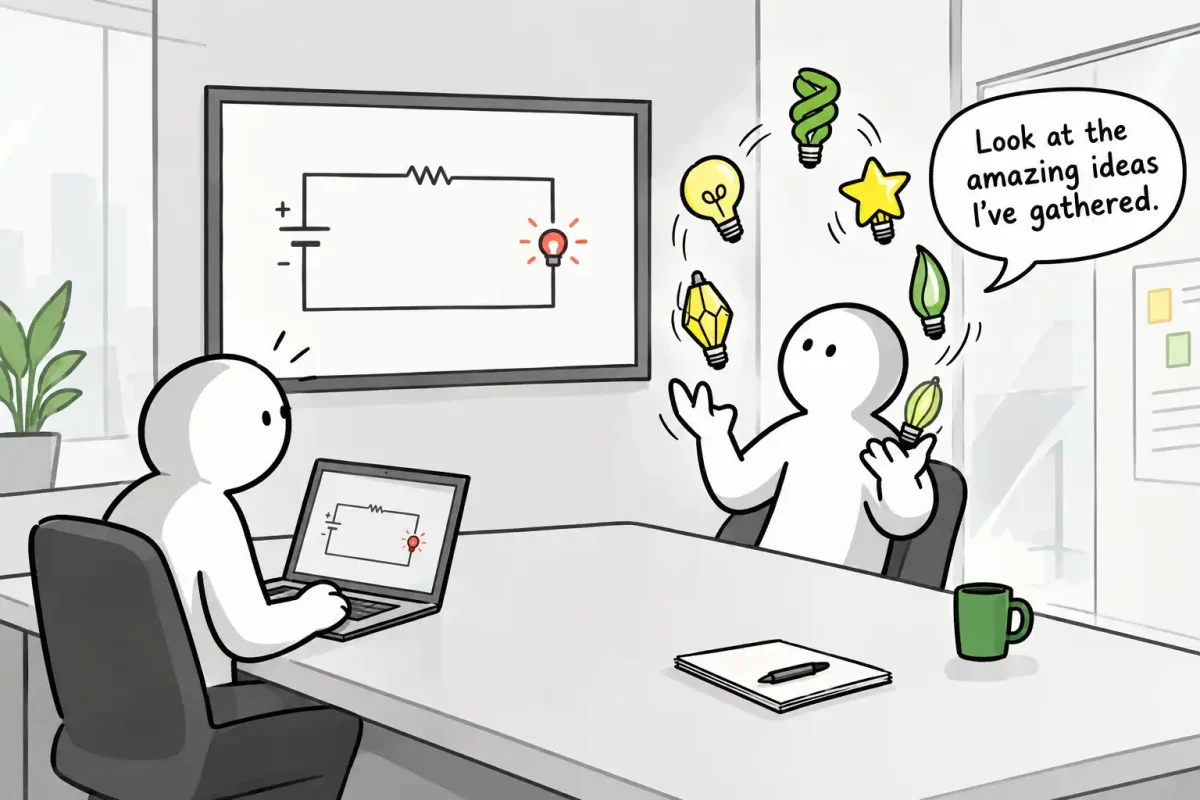
By the moment you are now reading about, two-thirds of the meeting time has passed. After an initial focus on reviewing the projects at the start, the discussion has jumped from one topic to another without any particular order. My mind has grown tired of all this jumping. Somewhere amid the client managers’ leaping from branch to branch, despite all my efforts to stay focused, I have lost my full attention and part of what was said. The other members of the design team do not seem to be faring much better. For most of the time, they have been following the client team’s successive changes of topic. The two younger members of the design team show the shifts in the conversation only through their facial expressions, now surprised, now approving. Fahimi, the design team manager, and Farshad, another team member and an experienced consultant, did react briefly to one or two of the client team’s ideas and proposals. But in this flood of topics, each quickly giving way to the next, they too found no opportunity to say what they wished to say and had room only to “react.” The designers had come to this meeting intending to advance the solution for one or two specific projects under design, but things have gone differently.
Now that a pause and an informal atmosphere have arisen, one of the client’s managers turns to the design team manager and jokingly mentions the subject of “teenagers,” managing communication with whom is another of the organization’s projects. The manager recounts a memory of a conversation about this with one of the organization’s customers. Since the discussion has happened to turn to this subject, the design team manager seizes the opportunity to report the latest status of this project, which was one of the design team’s goals for this meeting.
This project is at the initial stage of prototyping a solution. Fahimi immediately projects a file about the “teenagers” project onto the screen and explains that the design team wants to use the month of September to test the idea of registering teenagers. The organization in question is a mall in the north of Tehran, an affluent area of the city. Many teenagers who live nearby, as well as others from various parts of Tehran, use it as a meeting place. At times, an excessive gathering of teenagers in the mall, together with the excitable behavior typical of their age, causes problems for the mall’s customers and its security staff. Managing communication appropriately with these teenagers is the mall’s problem. So far, the client and the design team have concluded that teenagers who visit the mall regularly should be identified in some way, so that, knowing their identity is on record, they might behave in a more controlled manner while in the mall. Testing this solution, however, involves many considerations, and the work has so far proceeded with great caution.
Fahimi shows the poster the team has designed for this purpose. While the poster remains open before the client’s managers, he explains the testing process, the plan designed to test this solution, and the text written to fit it: “We saw it this way so that security doesn’t get involved itself. It welcomes them and explains that during this period you should go to … [name of a section of the mall] and register your name.” Then he shows an image of another guide sheet to be given to visitors and explains that as well: “We also planned the sheet so that no strange queue forms and so that it’s a better experience for them. They fill out a form. It’s perforated. The bottom part stays with security and the top part stays with them.” He then refers to what the mall’s head of security said on the day of the meeting with the design team, to make the point that collecting phone numbers from teenagers for registration is a good idea, because they are under 18 and would give their father’s or mother’s number. On hearing this last sentence, Anahita, one of the client’s managers, objects: “This just doesn’t feel good at all.” Fahimi responds by stressing practicality: “Yes, but it was the most practical way that wouldn’t give a bad experience.” This time Anahita enlarges the frame of the problem: “But I think the customer club should be more prominent in it.” Hooman, another of the client’s managers, who is also the mall’s CEO, agrees with her.
Fahimi shows the poster again and reads its text. He explains which parts of the research and the interviews conducted with teenagers at the mall each piece of the wording was based on. In the middle of his explanation, the mobile phones of two of the client’s managers ring. One answers outside the room, and the other answers in the room and shortly afterward outside it. Given how close it seems to the end of the meeting, the calls appear to be for coordinating subsequent tasks. Anahita, who is not convinced by Fahimi’s explanations, again speaks of how “frightening” this solution is to her. Hooman supports her objection, and Fahimi tries to steer them toward accepting a test of this solution. He points to the research conducted and to competitors’ work, and he brings up the collaboration of some members of the client’s organization in designing this poster. As if not listening to Fahimi, and cultivating a larger solution in her own mind, Anahita again raises the launch of a customer club. Hooman, again in support of her idea, adds another idea of his own to this hypothetical customer club. Farshad, Fahimi’s colleague, also joins in supporting Anahita’s and Hooman’s idea and offers ideas to complete the notion of a customer club for teenagers.
While those present are engaged in discussion about ideas, Hooman murmurs something to Vala, the organization’s senior manager, and Vala asks, in a fairly loud voice that I can hear from the other end of the table, “Has he come?” Hooman replies, “Yes. Our appointment was at six-thirty.” Farshad and Anahita, paying no attention to this exchange between Hooman and Vala, are discussing Farshad’s idea for the customer club and affirming one another. Fahimi, meanwhile, keeps trying to draw on the design research for evidence to confirm or refute the ideas, mostly to refute them. As time passes, the ideas sprout more and more branches, and Fahimi stops trying to debate or critique, as if he has lost hope that the prototyping plan for the earlier idea will ever reach the testing stage. When Farshad’s and Anahita’s ideation comes to an end, Fahimi adds only this explanation: “We had seen it as something quick that we could implement. Since the club hasn’t been formed yet either, we said let’s start dropping hints about it this year so they know it exists, and test it in winter, so that it’s ready for next summer and we know where we’ll give them discounts and what we’ll give.” He explains that in designing the solution, the team aims for a “feasible solution,” not necessarily the ideal one, and elaborates on the “priority of testing ideas” in design.
Having heard Fahimi’s explanations, Vala comes to his aid without preamble and steers the conversation back toward testing the solution Fahimi proposed, exactly contrary to the ideation dynamic that has run through the meeting. Vala has a suggestion for where to start the test. Entirely pragmatic, and at the same time entirely oblivious to the ideas he has been hearing from his own team until now, he asks Hooman, “Can we give these forms to the mall’s café?” Hooman, without raising any discussion of the earlier ideas, agrees: “It’ll be more natural.” Farshad joins the exchange and, this time, adds to the proposed test plan: “Or let’s find a digital route for it.” This renewed ideation from Farshad has two predictable consequences, and both occur. First, Anahita again agrees with the new idea. Second, Fahimi again proposes that they not enlarge the idea at this stage and instead test the current solution.
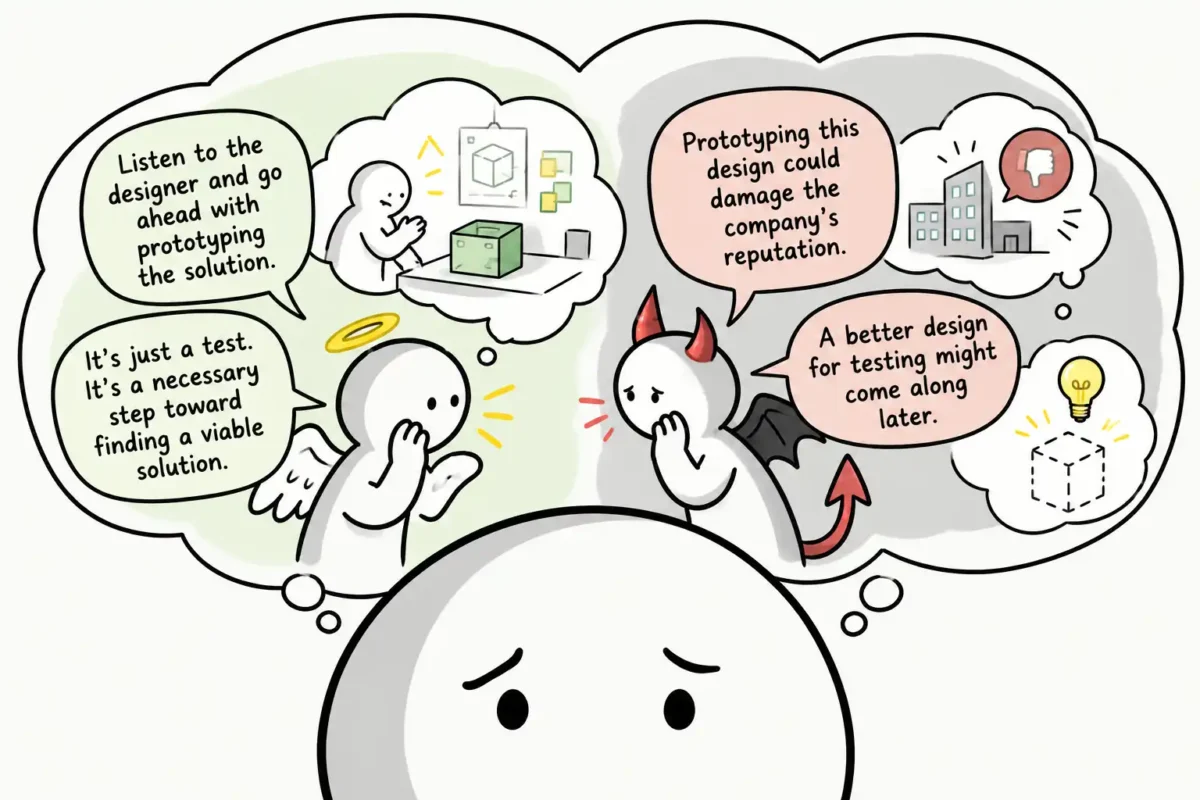
This is not the first time I have seen this pattern repeat. The designer tries to bring an idea to the testing stage sooner, but the client is anxious about testing the solution and, consciously or unconsciously, keeps wanting to make the idea more and more complete, in order to reduce the chance that the test will harm the organization’s brand. The client thus moves in a direction that blocks testing the current solution until a better one is reached, yet it is unclear how much completeness is desirable or when that better solution will be ready. The designer, on the other hand, prefers to test the idea in practice at an early stage, before heavy investment of money and time, believing that this is how a desirable, feasible outcome is reached sooner. But there is no agreement between designer and client on this, and there are no predetermined tools or conditions for determining whether we now agree that this solution can be tested.
In any case, it seems that Fahimi’s insistence on testing the existing solution, backed by Vala, has prevailed, and all those present now discuss this existing idea and slight improvements to it.
- Anahita: Yes, let’s drop the date [the specific period proposed for registration].
- Hooman: At least let them fill out the form, for now.
- Vala: Let’s see what their reaction is, to begin with.
- Hooman [laughing]: These kids use every possible route to get in anyway.
- Anahita: I put myself in their place… [she stops here because Farshad speaks]
- Farshad: You can’t put yourselves in their place… Maybe this will even act as a filter, so that the others hear about it and don’t come to this mall at all.
- Hooman [turning to Fahimi]: Whenever these are finalized, give us something so we can start with it.
- Fahimi: Do you want us to print the poster?
It seems we have finally reached a fragile agreement. It is clear that Hooman still has not warmed to testing the current solution. He glances at the poster again and, hesitating, says after a pause, “The fact that they collect information…” but does not finish the sentence. Had he done so, it would probably have been something like “it feels off.” Fahimi replies, “As it is, they phone the parents, and that’s worse.” Houman falls silent, still looking at the poster with the same doubtful expression, but at this point Vala closes the discussion with a summary: “Let’s go with this; we’ll learn something from it and fix it.” Then, turning to Fahimi, he says, “So let’s go with this and start together. Just coordinate with Hooman’s team.” Fahimi answers “Yes,” and Vala immediately jumps to the next topic: “What’s next?”
I wished I could have proposed a collective ideation session attended by both the client team and the design team, so that, if not ideas, then at least the considerations and remarks of both sides about testing the idea would have had more room to be voiced. My assumption is that ideation sessions, because of the relatively permissive atmosphere they create for expressing opinions, can sometimes serve as an occasion for voicing what has gone unsaid. But for fear of disrupting the design team manager’s plan for this project, I stay silent.
Scene Two – Part One, Morning
Two weeks have passed since the meeting in which we reached a fragile agreement to test the current solution. Together with Sima, I have come to the mall itself to brief its internal manager, Mohammadi, and its head of security, Ajdari, on the test, so that posting the poster and handing out the forms can begin as early as today. Summer ends in two weeks, and once schools reopen and the number of teenagers at the mall drops, the good opportunity for testing will be lost. On the day of the meeting, our arrival at the mall coincides with the sight of several large blocks in front of it. At first we assumed the mall had been sealed, but this was not the case. The executive team, including the managers we are meeting, is occupied with resolving a dispute with the district municipality. In any case, our meeting with the managers begins almost on time. The venue is a small room on one of the non-commercial floors, bearing no resemblance to a typical management office. Two large desks stand side by side: one is the secretary’s, and behind the other sits the mall’s internal manager, in a T-shirt and black trousers. Several chairs for visitors stand beside and facing the desks. When the head of security, who is also dressed in a black T-shirt and trousers, joins us, he sits on the chair beside the manager’s desk, and the meeting begins.
There is no space or screen for presenting files. We sit on two chairs facing the manager’s desk. To present the poster and forms, Sima has placed her laptop on her knees and turned the screen slightly toward the managers so they can see the steps and details of the forms. When the text is smaller, she rises, takes the laptop in her hands, and approaches the managers, who look at the finer text, sometimes standing and sometimes sitting.
While we are presenting our proposals in this room, various people, familiar and unfamiliar, knock on the door again and again, each asking a question: “Is this the management office?” “When is Mr. So-and-so coming?” “Could you sign this letter now?” “Do you have letterhead?” Even after hearing “There’s a meeting in here right now,” some keep on with their questions. The visitors are confused, as if they did not expect several people to be holding a meeting in such a space. Either way, whether or not they get an answer, they leave, and the meeting continues.
In the middle of Sima’s remarks, whenever she asks the two managers for their opinion and pauses to hear their response, they offer their own suggestions. Sometimes these concern appearance, such as “Why is the poster black, anyway? Isn’t it gloomy?” Sometimes they are meant to protect the mall’s image, such as “Take out [the word] ‘drug use’ and put ‘unnecessary traffic in the stairwells’,” which, although it adds to the ambiguity, is preferable in their view because “drug use doesn’t look pleasant.” Sometimes they repeat unpleasant memories of their dealings with teenagers: “Suddenly you see someone is here from two until ten at night and keeps entering and leaving. It makes a difference whether he came twice or fifteen times. Fifteen times creates a problem for our mall.” And sometimes there are proposals they have long held in mind and voice now that the opportunity has come: “In these groups, there are two leaders. If we get rid of them, we can control the rest. With this analysis, we could identify, say, ten of them and make them our security helpers for next year, like the plan for the police to enlist teenagers’ help to enforce traffic laws.” These are not good proposals, and they are so one-sided that one can imagine how negatively they would shape teenagers’ experience of the mall. Whatever they are, though, they receive little response from Sima, the design team’s official representative at this meeting. She mostly stays silent and simply listens to the managers’ suggestions. When the managers’ exchange among themselves ends, she goes on with the presentation and shows the next part of the poster, form, or relevant file. In other words, there is no conversation between the designer and managers. There is communication between the two sides, but it is not two-way, and each side is simply doing its own part so that this meeting can be said to have taken place.
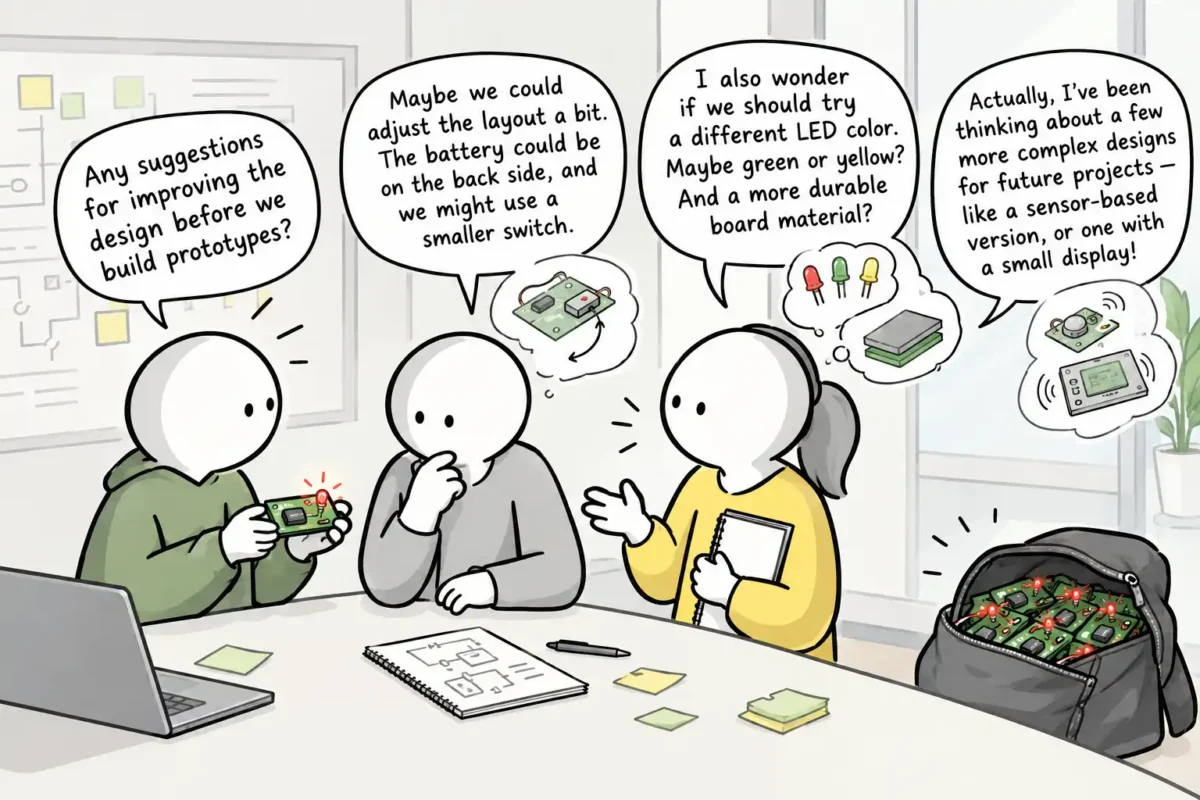
If Fahimi, in the meeting with the senior managers, tried to explain the reason behind each of the design team’s choices, Sima has forgone giving this explanation to the middle managers and makes no reference to the evidence the team gathered in its research. She does not even object to their odd ideas, though of course she does not agree with them either. She is merely presenting, as if the whole meeting were a ceremonial courtesy that has to be gotten through as quickly as possible. Occasionally she does ask questions, for instance whether the managers have any comments on the text written for the policy on dealing with teenagers who violate the rules. But the managers seem more eager to talk with one another than with Sima. In response to her question, they begin exchanging views among themselves, and finally end up with earlier memories and proposals such as the “security helper.” It is as though this meeting were, for the managers, an “opportunity” to voice their own ideas, which are rarely heard within the organization, even though this particular meeting has nothing to do with examining those ideas and was held to test a different plan. When it comes time to focus on the current plan, they have no ideas about its details, because it does not fit their earlier ideas, and they have formed too little of a picture of this new plan to comment confidently on its details:
- Sima [showing on the laptop]: This is the sheet they register on.
- Mohammadi: Just telling them to register gives them a good feeling.
- Ajdari: We should tell them: so that you’re comfortable, or so your pride isn’t hurt, come and register [he smiles and says] because they’re proud.
- Mohammadi: The one who goes around yelling should have his membership revoked.
- Ajdari: But the type of violation matters. The first time, the second time, a warning.
- Sima: But overall, do you agree on two times?
- Ajdari: Yes. We’re fine with three times as well. Since we’re heading in this direction, let’s give them some credit.
- Mohammadi: Through friendliness, it can be reduced.
- Sima: Now, say it’s the second time…
- Mohammadi: I think the second time we should say it’s a serious warning and, say, for a six-month period he can’t come.
- Ajdari: Should we take the parents’ number?
- Mohammadi: Is there any use in that?
This exchange continues, with some vagueness, until once again someone opens the door, this time a familiar face who greets us, takes something, speaks to the managers with gestures, and leaves. From what the managers say, it appears that although this meeting was supposed to be devoted to the details of the current solution and to coordination before testing it, the managers’ exchanges and uncertainties go beyond those details and concern the broad outlines of other solutions and the process of carrying them out.
About forty minutes into the meeting, a silence falls. Sima has presented what she wanted to present and now, quietly reviews, under her breath, what she should have said in the meeting, ticking off the items to herself. The managers apparently have no intention of adding any new point or raising any new question, and by saying “Now let’s move forward and catch its bugs” and “Yes, it’s a test,” they signal that the discussion of this matter is enough. At this moment, to my great surprise, Sima tells the managers that the poster and form they have just seen and commented on have already been printed, and that “if we could start the test now, that would be good.” The managers show no reaction. Perhaps they too had expected today’s meeting to be the same kind of “ceremonial courtesy” that simply has to pass, because, without any negative response to this statement, they discuss with Sima when the test can begin. When the secretary says something to Mohammadi and his attention is briefly drawn away from our shared conversation, I ask Sima under my breath, “Do you want to check the poster and form again, in case something was missed before starting?” She answers just as quietly, with a gesture, “The forms are printed.” When Mohammadi returns to the conversation, he and Sima talk about where in the mall the poster should be posted, and the meeting ends with Mohammadi’s remark, “Then it depends on that, so send it to us.” Although Sima replies, “I’ll edit the poster and form and send them,” I at least know that no editing is planned, and the client probably knows it too.
Scene Two – Part Two, Afternoon
Later that same day, we return to the mall with the pre-printed poster and forms and wait at the door for Mohammadi and Ajdari, who are to join us to coordinate the installation. They come, and within a few minutes the poster is placed in the agreed location. Now that it is in place, Mohammadi and Ajdari look at each other, as if the text of the poster had taken on a different meaning once it was set in the space of the mall, and their sensitivity to the text grows. Ajdari says, “Our other customers will think it’s meant for them too.” Staff and other people from the mall have gathered around us and are looking at the poster. It has been posted at the entrance door, a spot visible immediately upon entering the mall. Several customers arrive and read the text. The poster addresses “my young friend,” so not only teenagers but a broad range of customers who consider themselves young read it. Some pay no attention, some only look surprised, and one or two slow their steps, as if unsure what they should do now, but then they too lose interest and go on their way.
Meanwhile, a young man in a T-shirt and jeans, carrying a cloth bag, walks in and reads the text of the poster. Mohammadi greets him and asks, “Did you read it?” The newcomer, who I learn the next day is an employee of one of the restaurants the mall leases out, mocks the text in a tough-guy tone: “They don’t have cards. Is it a marriage contract that it needs a birth certificate?” Ajdari now says, jokingly, “Watch Manoto (The TV Channel) tonight. It’ll definitely show us.” The others laugh. Mohammadi, cautiously, says to us, “It’s close to the 16th of September (The day of Mahsa Amini’s passing) too. They shouldn’t think it’s connected to that.” Ajdari agrees: “It’s not a good time. We’ve waited this long; we can wait a bit more. Next month is better.” And now everyone has something to say: “The mood isn’t right,” “It’ll get tweeted,” “People will assume you’re collecting information,” “They should only guide them,” “Yes, and even then…”
The same newcomer, again in a mocking tone, says loudly, “It’s too late for this now. You should have thought of it before!” His tone offends me. I am angry; I half turn toward him and look at him with a slight frown. I think he probably did not notice, but Mohammadi and Ajdari must have. I ask myself, “Someone who hasn’t been introduced to us, whom we don’t know and whose position we don’t know, who probably doesn’t even know that this poster has been shown once at the senior-management level and again at the middle-management level of the organization: what right does he have to mock this work in such a tone? Why should Mohammadi bring him into the process of giving opinions about this poster like this? None of the main audience has even seen the poster yet!” Though angry, I know that, regardless of this unknown man’s tone, the very test that had to happen did happen, only so unprepared and uncoordinated that it ended before enough feedback was received from the main audience.
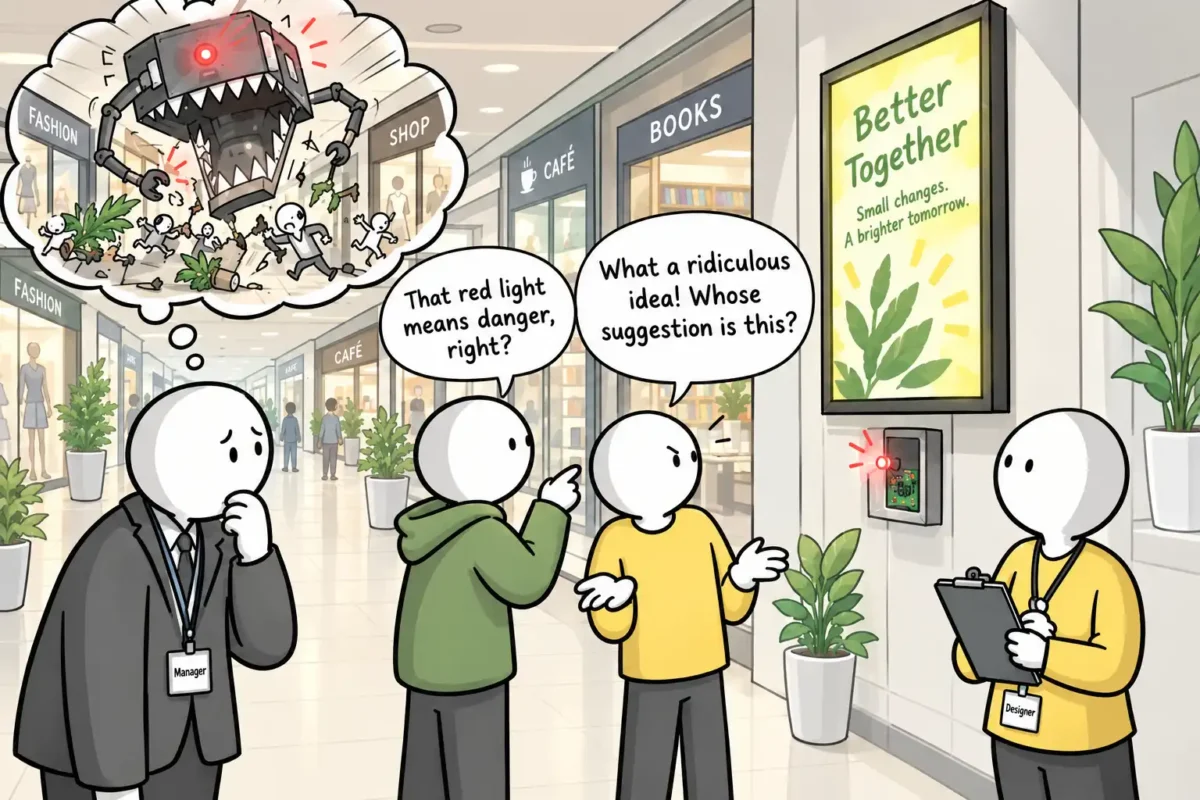
Mohammadi suggests waiting a few more days, and with the group’s agreement he takes the poster down and heads toward the mall’s other entrance. The others follow him, and so do we. Ajdari walks ahead of Sima and me. Between the two doors, Sima asks me, “What do you think?” I say that I think their concern about the date is right, and that perhaps the poster’s audience should also be made more specific. I say this a little loudly so that the managers can hear, so that they do not think we have become defensive over this disagreement or that something bad has happened, and so that they know their concern is understood.
At the stairs, the newcomer goes down. I ask Sima who that man was, and she, in a tone that shows she is upset by his behavior, says, “Who is he, anyway?” At the other door, Mohammadi speaks of a concern he seemingly had not grasped all this time, until he saw the poster at the door and it occurred to him that this problem would arise. Now he seems to see it clearly: “The police come and go here. Most of these protests are by kids this age. If they find out we’re collecting information, they’ll come and say, give the information to me. What are we going to do?” Ajdari agrees: “Yes. Let’s not collect important information.” Most of the concerns focus on the part of the poster that says “a birth certificate is required for registration,” and so they only now begin brainstorming about it: “It could be a face ID,” “or a number…,” and so on.
In any case, Mohammadi suggests that Sima talk again with Mr. Fahimi and Mr. Hedayati (Hooman), and says, “I’ll tell them my own opinion too.” He repeats, “At least let’s wait a day or two,” and adds after a pause, “If they say go ahead, we’ll go ahead. I say no, but if they reach the conclusion that we should put it up, we will.” Sima has no choice but to agree. Mohammadi points to the poster and says, “I’ll leave this in the office. You ask Mr. Fahimi and Mr. Hedayati again too.” I ask myself why this consultation with Hedayati, and this coordination between Mohammadi and Hedayati, has to happen only now. Why was no agreement reached last week between the organization’s senior and middle managers about the organization’s policy on this solution? It seems that between senior and middle managers, too, there is communication, but again it is not two-way or interactive.
In the senior managers’ meeting, although Hooman had criticisms of this poster, when Vala cut him off with the line “It’s a test anyway, we’ll work out the bugs,” the work moved forward, at least on the surface. In this morning’s meeting as well, the middle managers reached no agreement about the poster, yet the same justification, “It’s a test. We’ll catch the bugs,” was raised and things went on in the same way. But in practice nothing moved forward, and the test came to a halt in its first minutes. I had not imagined such a bleak outcome for carrying out the test. I thought that even if it did get as far as testing, there was at least the chance that the plan the design team had drawn up for the solution would run, in its planned steps, for a few days, and then the next step would follow from the feedback. But at step zero everything came to a complete halt, until this path is repeated for this same stage. Perhaps this time with a firmer agreement.
Scene Three
One week after the failed attempt to test the solution, a meeting is again under way in the organization’s senior management office, with the same attendees as before. In this meeting, too, several tasks currently being carried out for the organization are to be reviewed. The rhythm of the meeting resembles the previous one. The design team begins speaking and presenting a piece of work. The client’s attendees begin ideating on the basis of what they have heard. The design team tries to keep the discussion on the topic raised. The client’s attendees again put forward new ideas. The design team again explains the evidence and research findings. And once more the client team raises other ideas, either their own or ones suggested by the organization’s other consultants. This continues until, this time, Vala himself, observing the pattern, halts the discussion and proposes that, in another meeting, the client team and the design team first agree on what is desirable for customer satisfaction, and then agree together on the process of the work and the ideas.
As in the last meeting, now that a pause has occurred, the idea concerning the teenagers can be raised. Again, most of the meeting time has passed by the time this topic comes up. This time Melika takes the opportunity and reminds Fahimi of the topic in a whisper. Fahimi says a quiet “Ah,” which signals that he has remembered this topic is on the agenda too, and then, turning to the group, points to what happened on the day of the solution test and says, “We’ve prepared everything for the teenagers too, but we have to postpone it until next month.” Vala, who has already been informed of the incident through the middle managers, merely agrees, as in the previous meeting: “Yes, let’s leave it for October.” Hooman and Anahita, again as in the previous meeting, criticize the current solution. They bring up once more how frightening it is and the tone of the poster’s content for teenagers, and they recount their own memories and personal experiences in other malls in earlier times, when they themselves were younger, and how that experience differs from that of today’s teenagers.
Meanwhile, the client team’s members are gathering their things to leave, and the formal meeting has effectively ended. Vala has left the meeting, Anahita is standing, ready to go, and Hooman is answering people calling him from outside the room: “I’m coming now.” Even so, the conversation about this and other topics continues, and Fahimi has brought the poster’s image up again on the meeting room’s television. As if seeing this poster for the first time, Hooman suddenly says, “You said in the poster that they have to show a birth certificate.” In reply, Fahimi reminds him that they saw this poster at the previous meeting, which is indeed the case. Twenty days ago he showed this same poster in a meeting like this, and in exactly this atmosphere, that is, when the managers were getting ready to leave at the end of the meeting and, while gathering their belongings, also glanced at the poster. But Hooman says, “I haven’t seen this!” It is not unlikely that he truly did not see it, even though it was truly shown, because there is a gap between showing something and seeing what is shown. Near the end of a meeting, in the rush of leaving, with a mind full of other ideas that do not even agree with the design team’s current idea, it is quite likely that “seeing” did not take place. Even now, two sentences after “I haven’t seen this,” in the scramble of leaving, the ongoing talk jumps to an entirely different topic, and after a few sentences it returns to the teenagers.
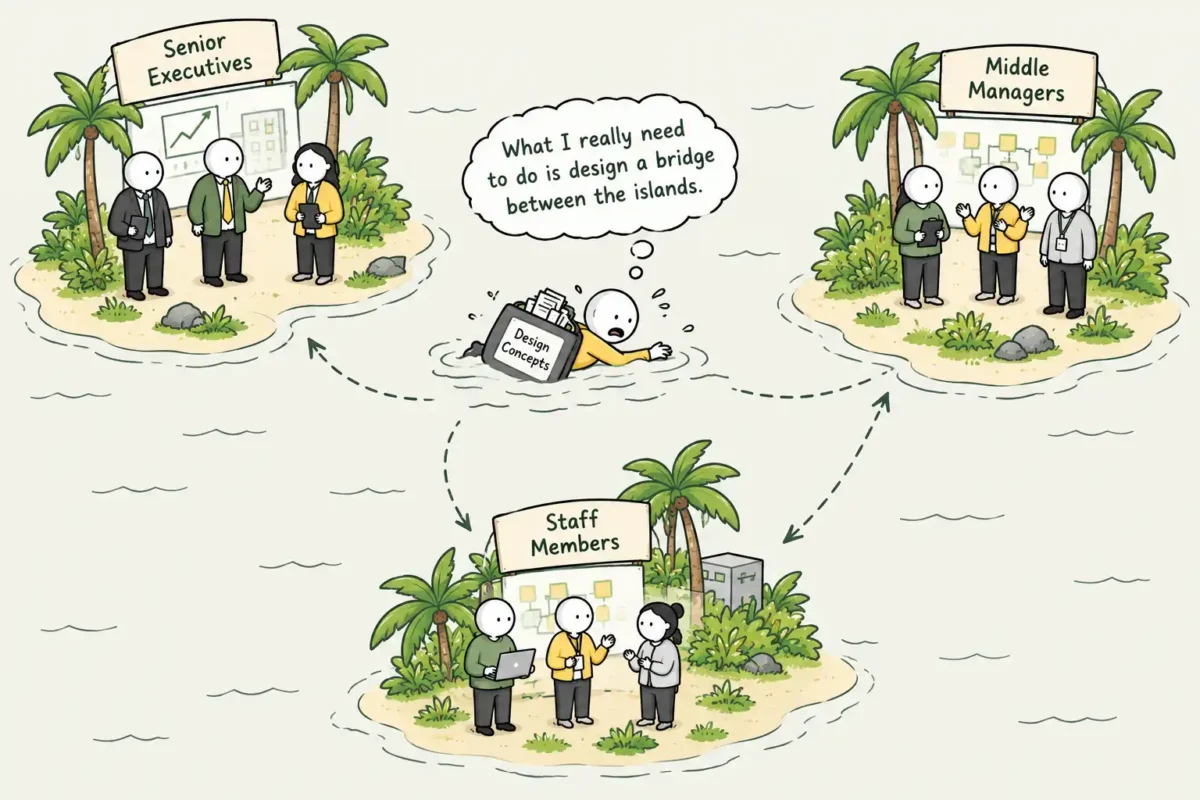
On this subject, Hooman once again refers to a conversation about teenagers that he had with someone outside the design team, this time a friend who works in the IT field, and which he has also sent to the mall’s head of security so that he can hear it. Hooman thinks the problem with the current solution is the design team’s lack of attention to the operational layers: “If we don’t pay attention to the operational layers, we’re two different islands.” Fahimi and Melika begin discussing and commenting on this, but Hooman gives them no answer and does not enter the conversation. His phone has rung, and although his eyes are on Melika and Fahimi and their conversation, he is answering his call in a telegraphic, word-by-word manner. When the call ends, Hooman says, “Our meeting is over.” On the way out of the room and the building, Fahimi and Hooman exchange a few more words, but again they have jumped to other topics and the coordination concerning them, and the earlier conversation about the teenagers does not continue.
Although the teenagers topic was raised in this meeting too, again no definite agreement was reached on how to move the work forward. In other words, the conversation was steered neither by the client nor by the design team toward focusing on this topic and reaching a conclusion about the next step. A critique was made, but there was not even the opportunity to address it in more detail. The solution was criticized and rejected, but the scattered proposals and critiques did not arrive at a new direction or an outline of a new solution.
In other words, at the start of this one-month period there was a solution that the design team intended to test, with the aim of bringing it closer to implementation sooner and, at the end of the month, being able to defend the team’s output and show that it is not merely a proposer of solutions but is also capable of carrying a proposal toward implementation. Sima’s effort in the meeting with the middle managers was likewise to get them onto the path of advancing, testing, and improving the solution sooner. But the minds of the managers, at both the senior and middle levels, have still not let go of the solutions that could have existed. They do not see themselves as partners in the proposed solution and regard it with suspicion. Their own proposed solutions are merely scattered, incomplete suggestions that never had the chance, in the process of designing the solution, to be raised and completed, or even to be rejected decisively.
These scattered suggestions are more numerous at the senior level. From almost every meeting with every consultant they have, from their own personal experiences in other malls, or even from what they have read and seen online, they carry ideas in mind that form an inexhaustible reservoir. It even seems that, when critiquing the design team’s proposed solution, managers at both levels compare it with the ideas they have drawn from elsewhere. Their critique is less a matter of proposing more practical details for testing the solution than of manufacturing rivals for it from among ideas whose implementation they have already seen or can better imagine. In this way, they find no similarity between this idea and their reservoir of ideas, and, in the absence of confirmation that the solution is feasible, they consciously or unconsciously close the path to testing it, perhaps in the hope that the design team will eventually propose a more familiar solution whose implementation they can picture.
On the other hand, not only the design team but the client too is in a hurry to arrive at a solution to this issue and to the other issues the mall is dealing with. That the client’s members are trying to arrive at a solution from every incoming idea, whether from consultants, experience, reading, or the suggestions of friends near and far, shows how urgently they need the problems resolved. They are clutching at whatever is within reach to arrive at a solution, whether or not it accords with the design team’s. It seems that the design team’s solution is, for them, only one of the paths that may lead to solving the problem. In other words, the design team, perhaps without being aware of this position, is in a hidden competition with other solutions that win the client’s attention more effectively, or are presented better, or appear more trustworthy.
Apart from this, there is no effective conversation between the organization’s senior and middle managers either. Although they agree in rejecting the design team’s proposed solution, they are unaware of each other’s ideas about the teenagers’ issue. Senior managers raise ideas from external sources or their own personal experiences and do not bring the middle managers’ views on the matter into the meeting. Middle managers, for their part, ask the design team about the senior managers’ views on the teenagers issue. The design team could have been a pretext for creating this conversation, but it does not lead it, and its behavior as an intermediary is passive.
Meanwhile, the design team hears the senior managers’ views but does not necessarily bring senior and middle managers together, even in the form of solution-design sessions, so that they could hear each other’s remarks and suggestions directly. Even in a simpler form, the team does not pass the senior managers’ views on to the middle managers in a timely way, within the limits of what may be disclosed, so that the latter could have a clear picture of the organization’s overall approach to solving each problem. Perhaps this is because there is no agreement about how confidential the conversations between the design team and the client’s senior managers are. Conversely, the middle managers’ ideas and views are hardly passed on to senior management. One could even say that the middle managers’ views have no influence within the design team itself. Before hearing these views, the team, owing to its considerations about the speed of delivering outputs, has no time to hear them and take their points into account in designing the solution. In the design team’s conversations with the organization’s senior managers, the mall customers’ experiences extracted from the research are discussed, but the views and experiences of the middle managers are not. It seems that, in interacting with this particular client, the role of this category of stakeholders, the organization’s middle managers, in supporting the proposed solution has not been taken very seriously. Yet had the design team regarded the middle managers as its most serious allies in testing and implementing the solution, and had it not seen the meeting with them merely as a stage, a ceremonial courtesy, to be gotten through, it would not have lost their support so quickly when a problem arose in testing the solution, because the solution under test would also have been their own proposal.
This weak three-way relationship among senior managers, middle managers, and the design team has meant that, in the two-way relationships among these stakeholders, there is always room for blaming the absent party, and the blame falls especially on the design team. For example, although senior and middle managers have no conversation with each other about possible solutions, and the middle managers regard the design team as an “opportunity” to bring their ideas to the senior managers’ ears, once the test of the solution had failed they agreed, in speaking with the senior managers, on the “frightening” nature of the design team’s solution for teenagers. They attributed it to the design team’s operational misalignment with the organization, but said nothing of the conceptual and practical misalignment among managers at the organization’s various levels. This solution had, before implementation, received approval for testing from the senior managers, in whatever form it then had. Yet until the design team approached the middle managers, the latter had not once been informed by their own senior managers of the nature and quality of the solution the design team had proposed.
Another issue is the absence of a standard procedure in the design team’s meetings with senior managers, and the design team’s passivity in managing the time of these meetings. Every meeting at this level has an agenda overflowing with different topics, each at a different level. Some are very minor, at the level of a solution’s details. Others are at the level of strategic agreements with external contractors. Still others are at the level of the overall vision and macro strategy of the whole organization. In addition, these meetings have increasingly become an occasion for the senior managers’ numerous ideations, as though the managers believe they must raise a great many ideas in every meeting so that the design team will then follow up on making those ideas implementable.
In other words, although these meetings are held to report on the work and to coordinate between senior managers and the design team, and the design team’s achievements are supposed to be discussed in them, in practice the team is cornered, as if trapped in the corner of a boxing ring. A flood of requests, differing priorities, and colorful ideas from the client at various levels pours toward the design team, which does not even have the chance to react to many of them and must spend the whole meeting merely listening to the senior managers’ requests and ideas. The only action the team takes, and this only partly by the team manager, is to try, in the brief pauses of this torrential flow, to defend the path the team has traveled, from research through ideation and prototyping, on the basis of evidence and documentation. In many cases this too is unsuccessful.
The meeting keeps jumping from one topic to another, a new critique or new idea is constantly raised, and there is not enough time to address each idea or critique properly. The discussion remains at the level of tossing the ball into the client’s court, the designer’s, or even the absent customers’, and reaches no agreement, and every meeting repeats this same routine. This unsuitable routine prevents the focus needed to arrive at a specific solution, or at an agreed path toward one. Although Vala himself identified the problem of disagreement between client and designer “our minds [the client team’s] and yours [the design team’s] have drifted apart”, he did not attend to the fact that the very routine of holding meetings and setting their agendas contributes to reaching this point. He merely referred the resolution of the problem to “holding another meeting,” whose timing is not even known, whereas repeating meetings with this same routine will not result in agreement.
The middle managers’ minds, too, have not let go of giving ideas and searching for another solution. As noted earlier, part of this behavior goes back to their not being involved in the process of designing the solution, but another part may be a sign that the problem statement has not become clear to the managers either. A pattern observable in the middle managers’ meeting with the design team’s representative, Sima, is that whenever the managers hit an “I don’t know,” they returned to their memories of the problem or of their interactions with teenagers and tried again to open up the problem, exploring what the solution might be: “Should we get the parents’ number?” “It can be reduced through friendliness…” Here the designer’s role could be to help the managers reach, on the basis of her research evidence, an agreement about the leverage points that affect user experience. In this way, the designer can prevent the problem from being repeatedly reopened in the client’s mind before the proposed solution is tested. In effect, it was necessary that, in the meeting with the middle managers, Sima be able to bring them along with the reasoning behind the current solution, on the basis of research results and evidence, and say why this solution would probably be a good candidate for testing. But the middle managers had neither participated sufficiently, earlier, when the problem statement was being opened up, to be able to empathize with the solution now, nor were they now hearing the justifications for arriving at it. Consequently, at this stage, they keep returning personally to reopening the problem statement.
In essence, the cause of this vicious cycle, in which scattered critiques and suggestions are raised without reaching a definite agreement, is that the way the design team communicates with the organization’s managers and staff at each level was never defined. What role the design team has in this organization, with what purpose each meeting at each level is held, what outputs it will have, what can or cannot be done at which stages, and who from the client’s side will be involved at which stage of the project and in what role: none of this was defined at the start of the work. This lack of definition has produced a flawed communication routine that has made reaching agreement along the path of designing the solution difficult. Every meeting held without a specific defined framework makes this disagreement worse. These disagreements, and fragile agreements of the kind that arrive, without the necessary persuasion and merely to take one step forward, without genuine consent or alignment, at the phrase “It’s a test. We’ll catch the bugs,” create a fundamental obstacle to advancing the work at one point: the stage of testing the solution. As soon as the risk of testing is felt, a thousand critiques and unspoken, unheard, un-understood remarks show themselves from every direction, and responding to all of them at all levels seems impossible.
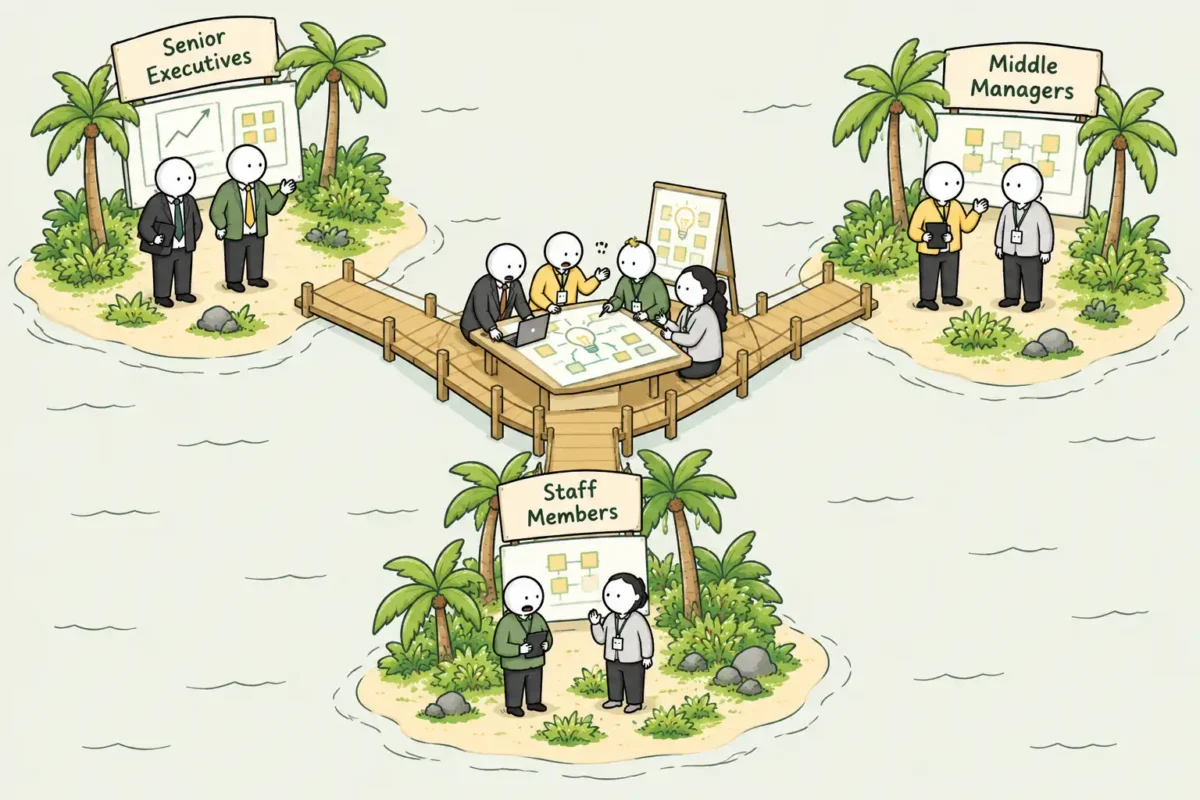
The design team needs to define a specific communication routine and to define actively the format of meetings with the different levels of management and staff. Even if the communication structure with the client was raised by the design team at the start of the project, it is still necessary to insist continually, throughout the project, on adherence to it, so that confusion in communication and in the working routine does not obstruct the design team’s activity. At the start of the interaction with the client, it must be determined, in agreement with the client, what purpose the design team has in holding each meeting at each level, what output it will reach, who should attend, what collaborations among them are needed to achieve the required output, and so on. It is equally important that this definition be safeguarded, and that at the start of each meeting the purpose and function of the meeting, and the role of the client organization’s managers and staff in achieving its output, be recalled. Otherwise, the client’s managers come to the meeting with minds disordered by the various problems they are wrestling with and the scattered ideas tied to their various wants. They state what they want but do not see what is presented “I haven’t seen this at all!”. In the morning, in the meeting with the design team’s representative, they say “Let’s implement it and see what happens,” and in the afternoon they say “This isn’t the time for it,” although that same morning they had made no mention of the desirable timing for testing the solution. And they do not accept their share of responsibility for the decisions of the meetings they attended. It is hoped that an agreement on the form of communication, and on the roles and responsibilities of both sides in solution-design meetings, will raise the chances that the organization’s managers accept responsibility for the outputs of the meetings, and that the design team will not be left to accept alone the responsibility for the failure of ideas.